LA Boiler Service

Why your boiler makes a banging noise in Louisiana

Step 1 of 3: Equipment

Why does my boiler make a banging noise?

A banging boiler is unsettling, especially if it starts up out of nowhere during a cold snap. With most homes in Louisiana heating with electricity, a boiler is less common here, and when one starts knocking or popping, it's not always obvious whether it's a minor nuisance or a sign something's about to fail. You want to know what's making that noise before it gets worse or shuts the system down.

It's almost always kettling, caused by mineral buildup on the heat exchanger

The banging comes from water trapped under a layer of scale or sludge inside the heat exchanger. That water turns to steam, collapses back into water, and the pop you hear is the shock of that happening over and over. It's sometimes called kettling because it sounds like a kettle starting to boil. The buildup forms over time as minerals in the water settle out, and once it's thick enough, heat can't move through it evenly. Left alone, the heat exchanger works harder than it should and can crack from the stress. A boiler that's banging is still running, but it's telling you the water side needs attention before that damage happens.

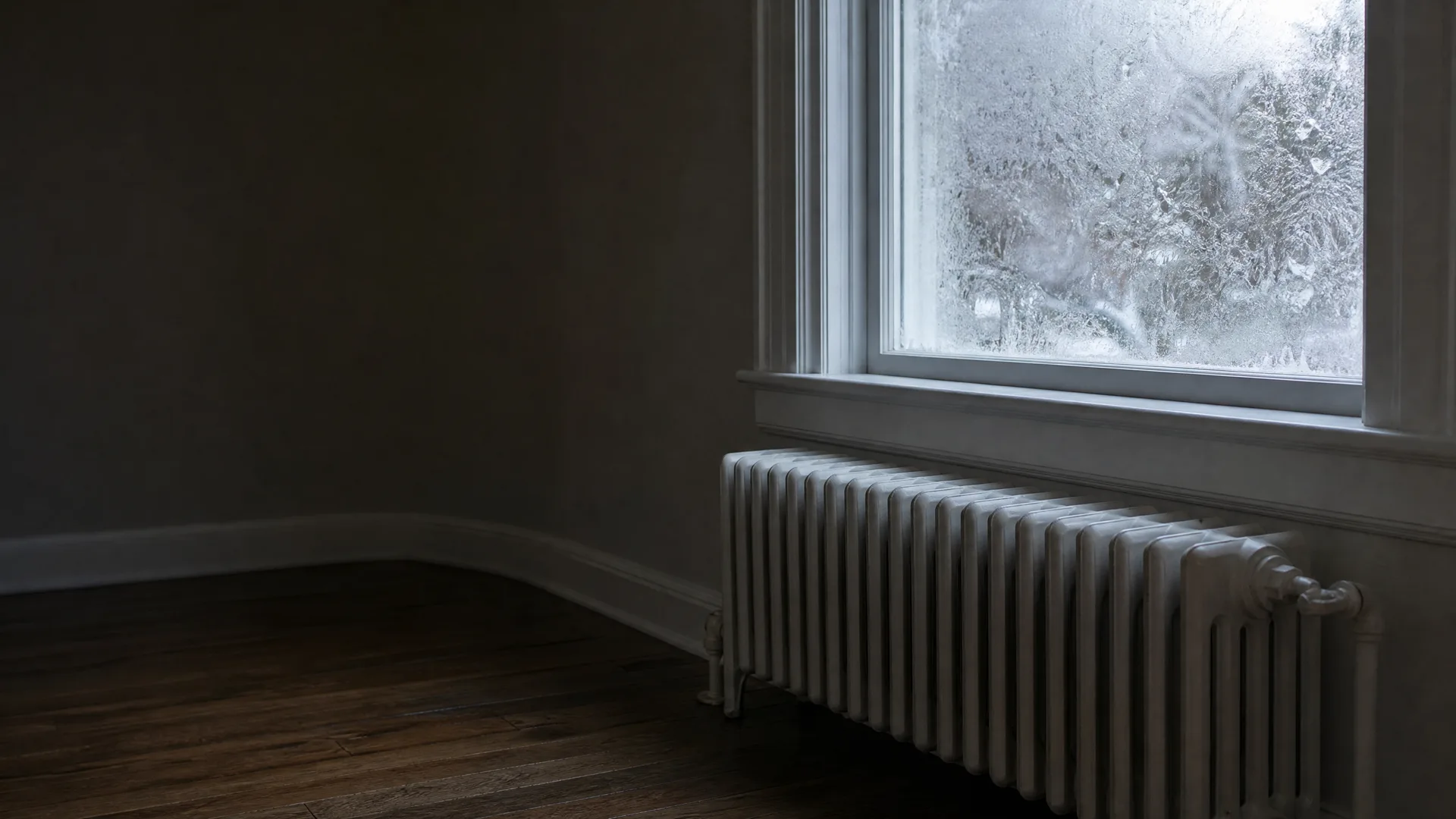
A white cast-iron column radiator under a frosted window in a dim empty room with dark walls and a wood floor, with snowy trees visible outside.

You're up before the sun, and the living room is cold enough that you can see your breath near the window. Ice has formed on the inside of the glass, a thin frost pattern over the pane. The cast-iron radiator under the window pops, then bangs hard enough that you glance over to check nothing fell. It settles, then does it again. You sit with your coffee and wait it out, one ear on the radiator, figuring out whether to layer on another blanket or go check the thermostat. Outside, the cold snap that started two nights ago is still holding on.

Inside the Boiler or in the Pipes

Kettling in the boiler

  • Scale or sediment has built up on the heat exchanger, and water trapped under it flashes to steam when the burner fires.
  • The banging and popping comes from inside the boiler itself, usually loudest right when it kicks on.
  • Flushing the system and descaling the exchanger clears it, though if scale is heavy it can mean a new exchanger.
  • This gets worse over time, not better, since the layer of scale thickens each season the boiler runs.
  • A contractor can check the water hardness and the condition of the exchanger to confirm this is the cause.

Air or expansion in the pipes

  • Trapped air in the lines or a radiator moves and knocks as water pushes past it on its way through.
  • Pipes that were sized or pitched wrong expand and contract against joists as they heat, which makes a banging you hear in the walls or floor.
  • Bleeding the radiators or venting the system often quiets this without touching the boiler itself.
  • The noise tends to travel, so it can sound like it's coming from a different room than where the pipe actually is.
  • A cold snap makes this worse since the pipes heat up faster and expand more than they do on a mild day.
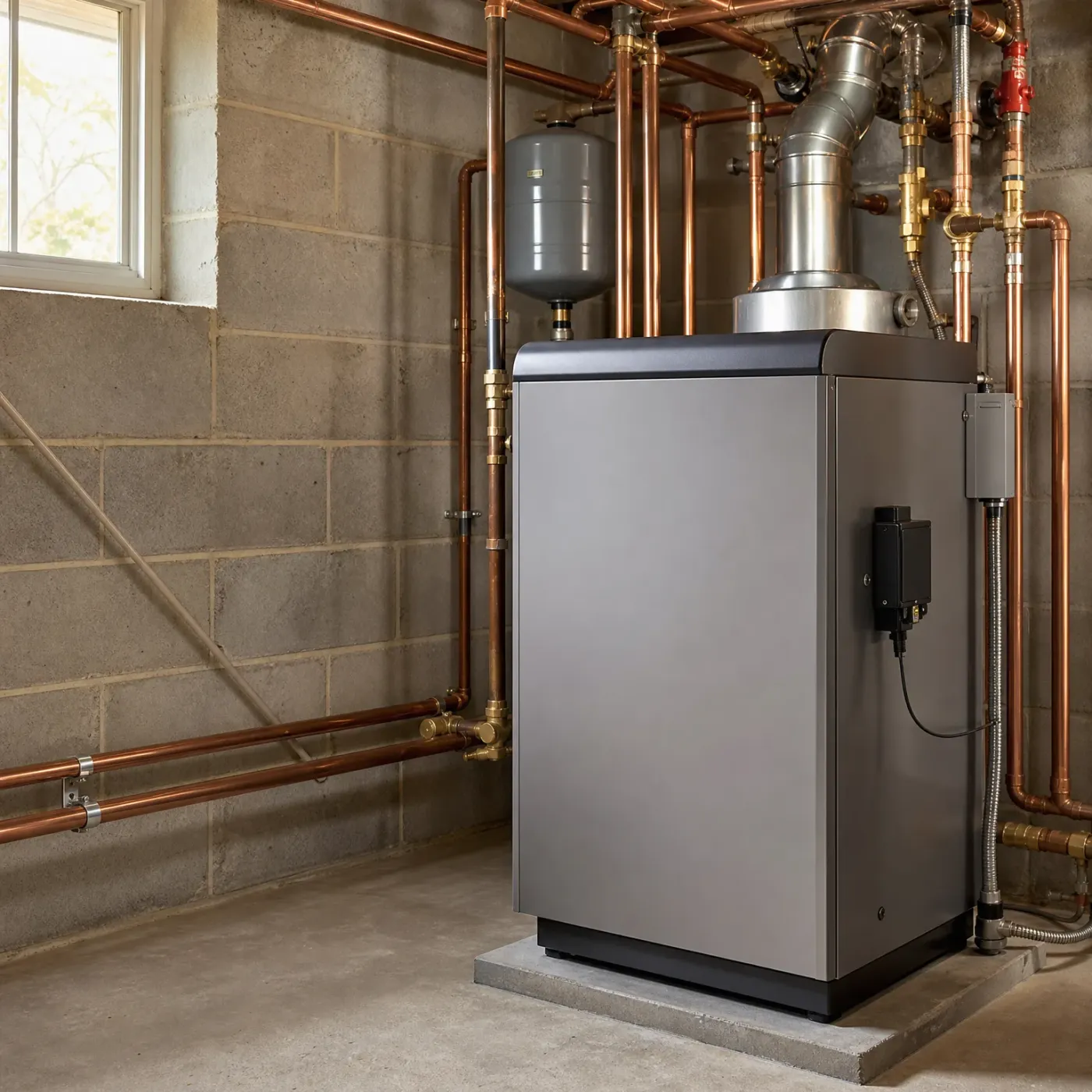
A dark gray floor-standing boiler on a concrete pad in a basement, surrounded by copper piping, brass valves, a gray expansion tank, a circulator pump, and a metal flue pipe against concrete block walls.

Running quiet

A boiler that's venting and circulating the way it should runs with barely a hum, even on the coldest morning. Water moves freely through the copper lines, the pressure gauge holds steady, and the burner fires without any pop or knock from inside the casing.

A blue boiler on a raised concrete pad in a basement corner, with copper and steel pipes, a gauge cluster, an expansion tank, and a metal flue running up the bare concrete walls.

Banging under load

An older boiler like this one can build scale inside the heat exchanger over years of use. Once that happens, trapped water turns to steam the moment the burner kicks on, and you hear it as a knock or a bang before the heat ever reaches the radiators.

A blue oil-fired boiler with a pressure gauge, burner unit and metal flue sits on a concrete pad in a basement corner, surrounded by copper and black pipes against bare concrete walls.
Before you get your boiler repair
A gray boiler unit on a concrete pad in a basement corner, connected to copper piping, circulator pumps, and a ceiling-mounted expansion tank against bare concrete walls.
After you get your boiler repair
A gray floor-standing boiler on a concrete pad in a basement with concrete block walls, connected to copper piping, a flue vent, and an expansion tank.

A pro who works on boilers

Fill out one short form instead of calling around.

Describe your boiler job, and a local pro who handles it gets in touch.

Skip the calls

There's no charge for the request.

What's actually happening in your house right now

You hear it most on the cold mornings, that bang or knock from the radiator or the pipes as the boiler fires up. Sometimes it's one hard pop. Sometimes it's a string of them, working down the line as the heat spreads through the house. You might notice a room that never gets quite warm, or a radiator that's hot on one end and cold on the other. If the banging is coming from inside the boiler itself, that's water trapped under scale on the heat exchanger, and left alone it wears on the metal every time the burner fires. A knock you can trace to one pipe is usually trapped air or a fitting working loose, less urgent but worth sorting before it gets to be more than a noise.

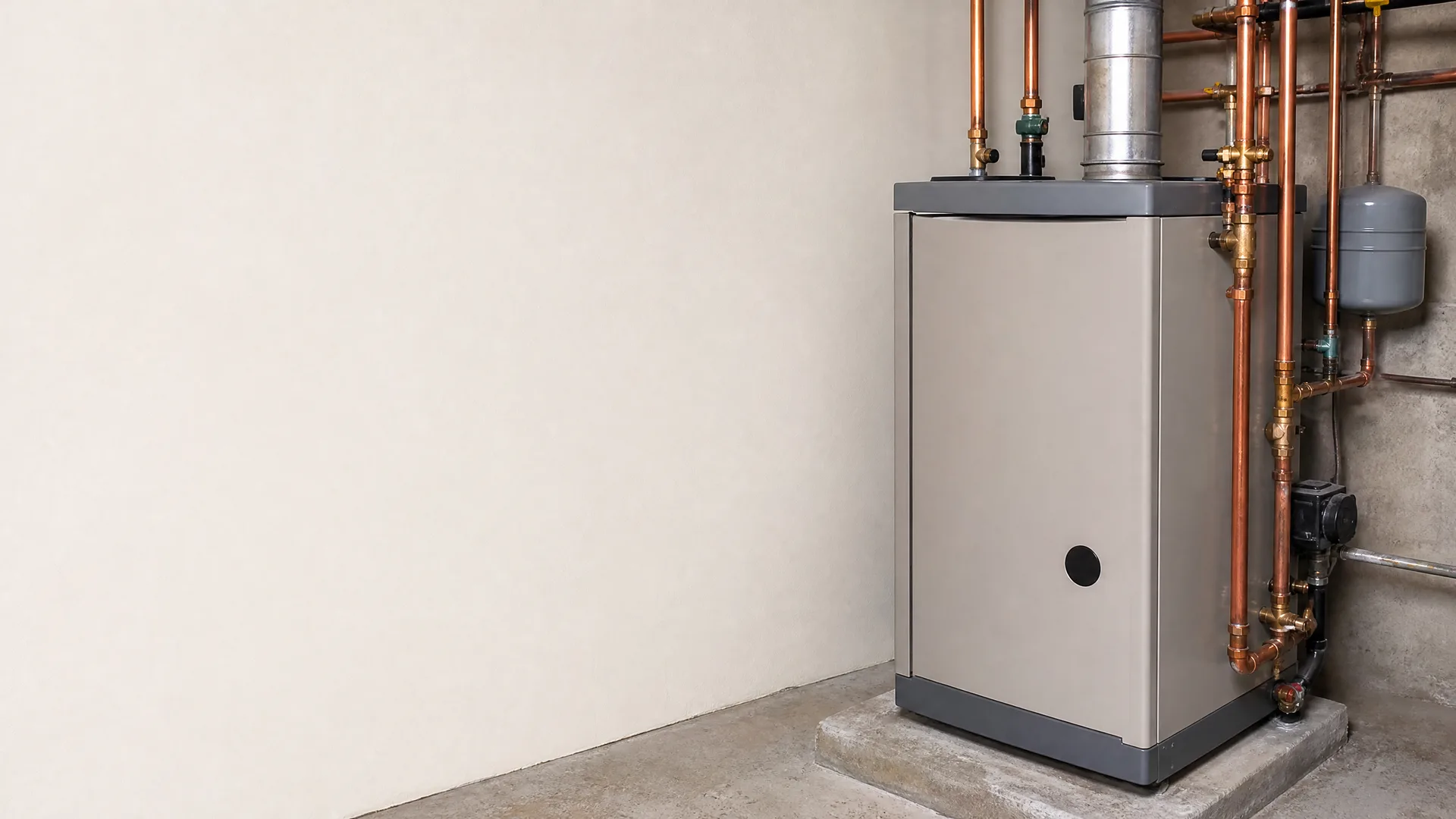
A gray floor-standing boiler with a metal flue pipe, copper piping, a circulator pump and a gray expansion tank, installed against a concrete wall.

Why trapped air bangs so loud

Water lines in a boiler system are supposed to run full. If air gets into them, it collects at high points, in a radiator or a bend near the ceiling. When water tries to push past that air pocket, it slams into it instead of flowing through smoothly. That's the knock you hear. Cast iron radiators carry the sound well, so a small air pocket can sound like something much bigger.

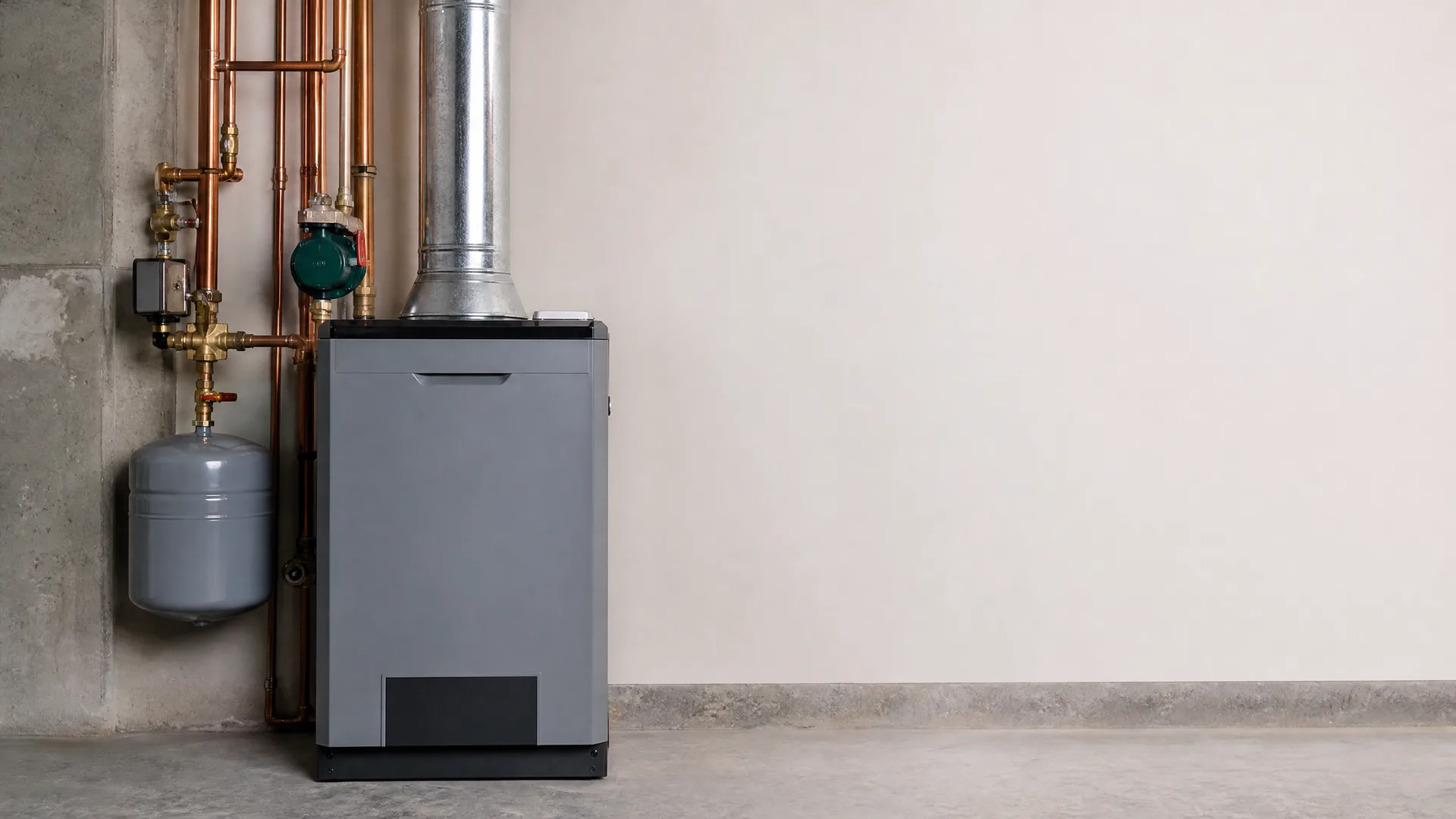
A tall grey floor-standing boiler on a concrete plinth in a corner of a room, with copper pipework, a flue, a circulator pump and an expansion vessel to its right, beside a plain cream wall.

What scale does to the noise

Boilers run on a closed loop, so the same water circulates for years unless the system is drained. Minerals in that water settle out over time and stick to the heat exchanger. Once a layer builds up, water underneath it can turn to steam the instant the burner fires, and that steam collapses with a bang. The longer scale sits, the more surface it covers, and the louder and more frequent the noise gets.

A woman in a cream cardigan and jeans stands with one hand raised facing an open front door of a gray horizontal-siding house, with a black lantern wall light, a potted shrub with yellow flowers, and a stone-faced porch column.

The order it happens in

The burner fires first. Water in the boiler heats up and starts moving through the pipes before the whole system has had a chance to vent whatever air got into it on the last fill. That water hits a pocket of air or a patch of scale sitting on the heat exchanger, and that's the bang you hear, not the burner itself. A boiler running clean, with the air bled out and the water treated, moves heat through the house without announcing itself at every joint.

Pinning down which one it is from a cold kitchen at six in the morning is hard to do on your own, and harder still to know if it's safe to wait on. A contractor who works on boilers in Louisiana sees this setup less often than furnaces, since most houses here run on electric heat, so it helps to get matched with one who already knows these systems rather than spending your evening calling around and describing the same noise three or four times to find out who can even look at it.

A living room corner with a beige upholstered armchair holding navy and striped cushions, a small round wooden side table with a carved bowl and a potted green plant, a framed landscape picture on a pale wall, built-in shelving, and a curtained window.
A smiling woman with dark shoulder-length hair in a cream V-neck sweater sits at a marble counter with a glass of red wine, with a kitchen and softly lit living room behind her.
A woman in a dark green sweater laughs while seated at a marble kitchen island with a glass of red wine, with open shelving, cabinets and a living room visible behind her.
A woman with long dark hair in a cream knit sweater laughs while looking off to the side, seated at a counter with a glass of red wine, in a dimly lit living room with a sofa, lamp, framed pictures and houseplant behind her.
A smiling woman with long dark hair in a beige sweater sits at a marble kitchen counter with a glass of red wine, with a dimly lit living room behind her.
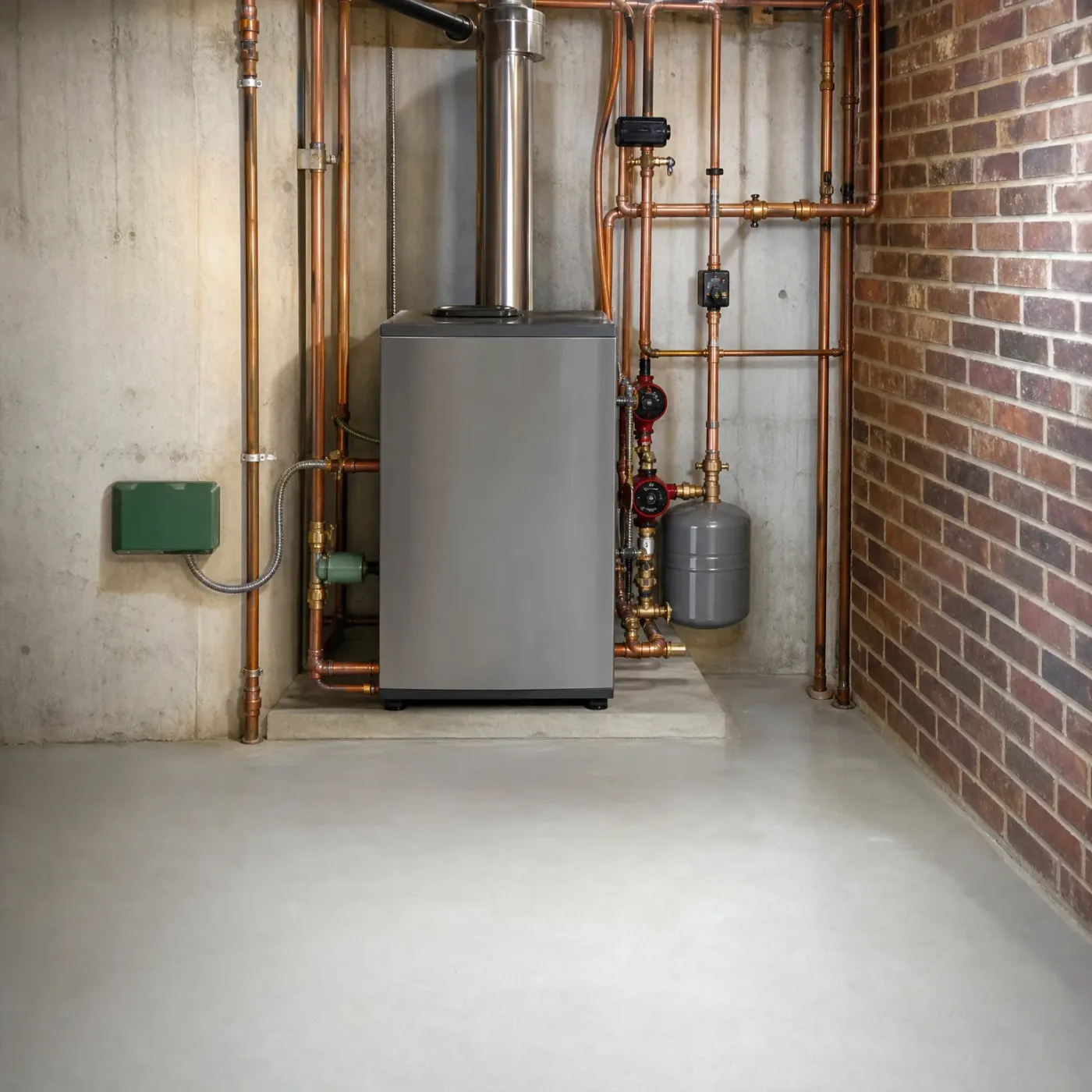
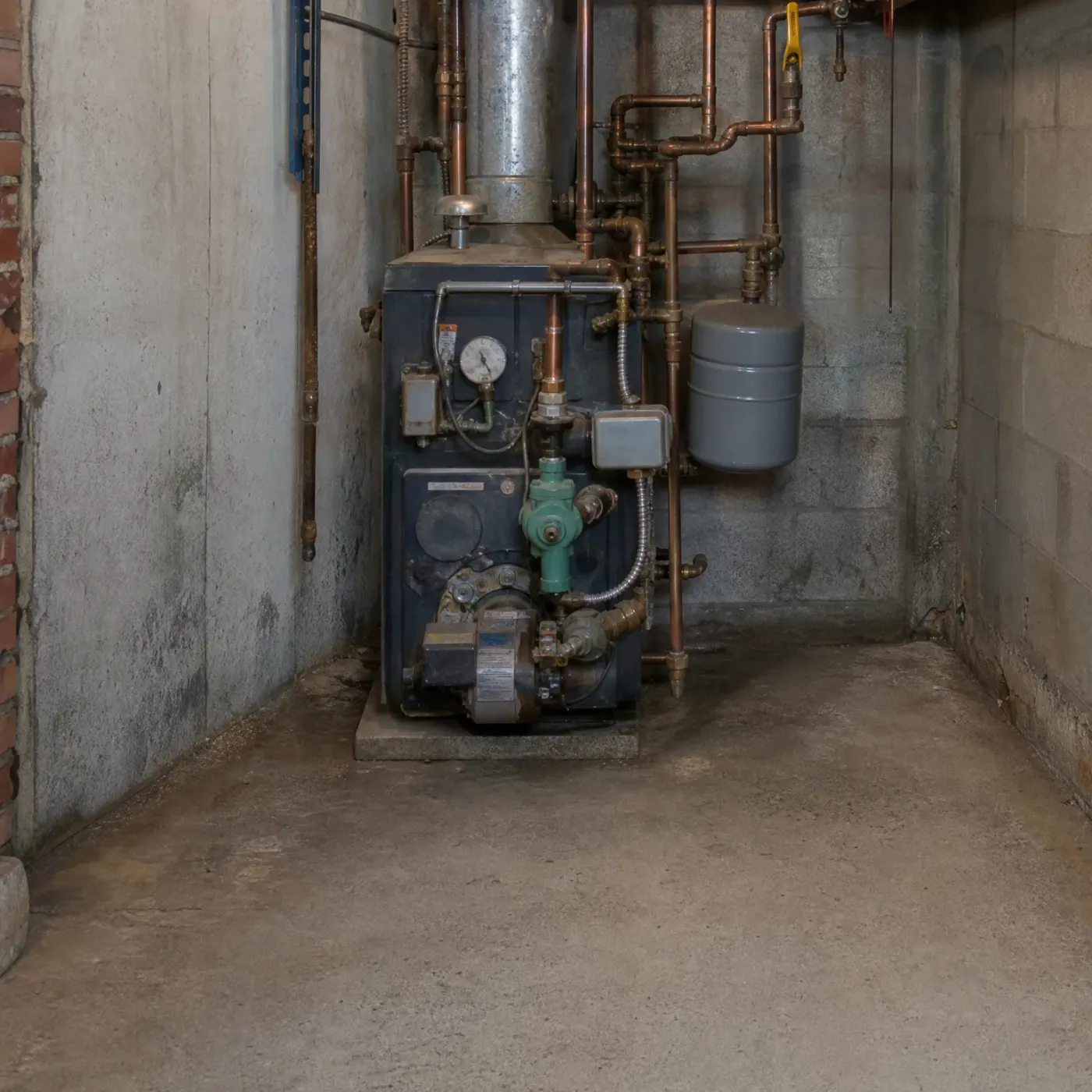
A gray boiler on a concrete pad in a basement, connected to copper piping, valves, pumps and a gray expansion tank, with a concrete wall on the left and a brick wall on the right.
Water moving freely through clean copper, the pressure holding steady, and the burner firing without a sound from inside the tank.
A dark cast-iron boiler with copper piping, pressure gauge, and a gray expansion tank sits on a concrete pad in a basement corner with concrete block and brick walls.
Scale built up inside an old oil-fired unit, trapping water against the heat exchanger until the burner forces it to bang.

Winter nights average 43°F statewide

Winter nights here average 43°F, which is mild next to most of the country, but it's still enough to cycle your boiler on through the night. Each time it fires, the pipes and radiator flex and settle again, and that's often when you'll hear the bang.

NOAA nClimDiv 1991-2020 county normals weighted by homes

A banging boiler almost always comes down to trapped air or scale buildup inside the system, and neither one clears up on its own. Boilers are uncommon enough in Louisiana that finding someone who actually works on them regularly takes more digging than finding an electric heat tech, and most people don't have a name ready to call when a cold snap hits and the radiator starts knocking at five in the morning. You'd otherwise be searching through contractors who mostly handle furnaces and heat pumps, calling a few to ask if they even service boilers, explaining the banging and when it happens all over again each time, then weighing quotes that may not even be for the same fix. Getting matched with a contractor who already knows this equipment skips that part. The noise has a cause, the cause has a fix, and the next step is getting someone qualified to look at your system and tell you which one you've got.

A covered porch with a wood front door with six upper glass panes, a lantern wall sconce, tapered column on a stone base, potted ferns and flowers, a woven doormat, and wide steps leading to a paver walkway bordered by shrubs and white hydrangeas.
A beige upholstered sofa with a cream cushion and chunky knit throw sits beside a white-framed window, with a leafy potted plant in a stone vase against a tan wall.
Sunlit corner of a room with a linen curtain beside a window, built-in shelves holding ceramic vases, wooden bowls, a potted green plant, stacked books and a woven basket, above a textured rug.
A dark wood three-drawer dresser against a pale wall holds a tall ceramic vase with leafy branches, stacked books and a shallow bowl, with a framed print above, a woven basket on the wood floor at left, and an upholstered sofa with a green pillow in the foreground.
A cream upholstered sofa with a textured ivory cushion and a rust-colored cushion sits beside a window with sheer linen curtains, with a potted leafy plant behind it and a wooden bowl on a wood table in the foreground.

Get your boiler to the right pro

Explain the job once and skip repeating it on every call.

Answer a few questions

You only hire the pro if you want to.