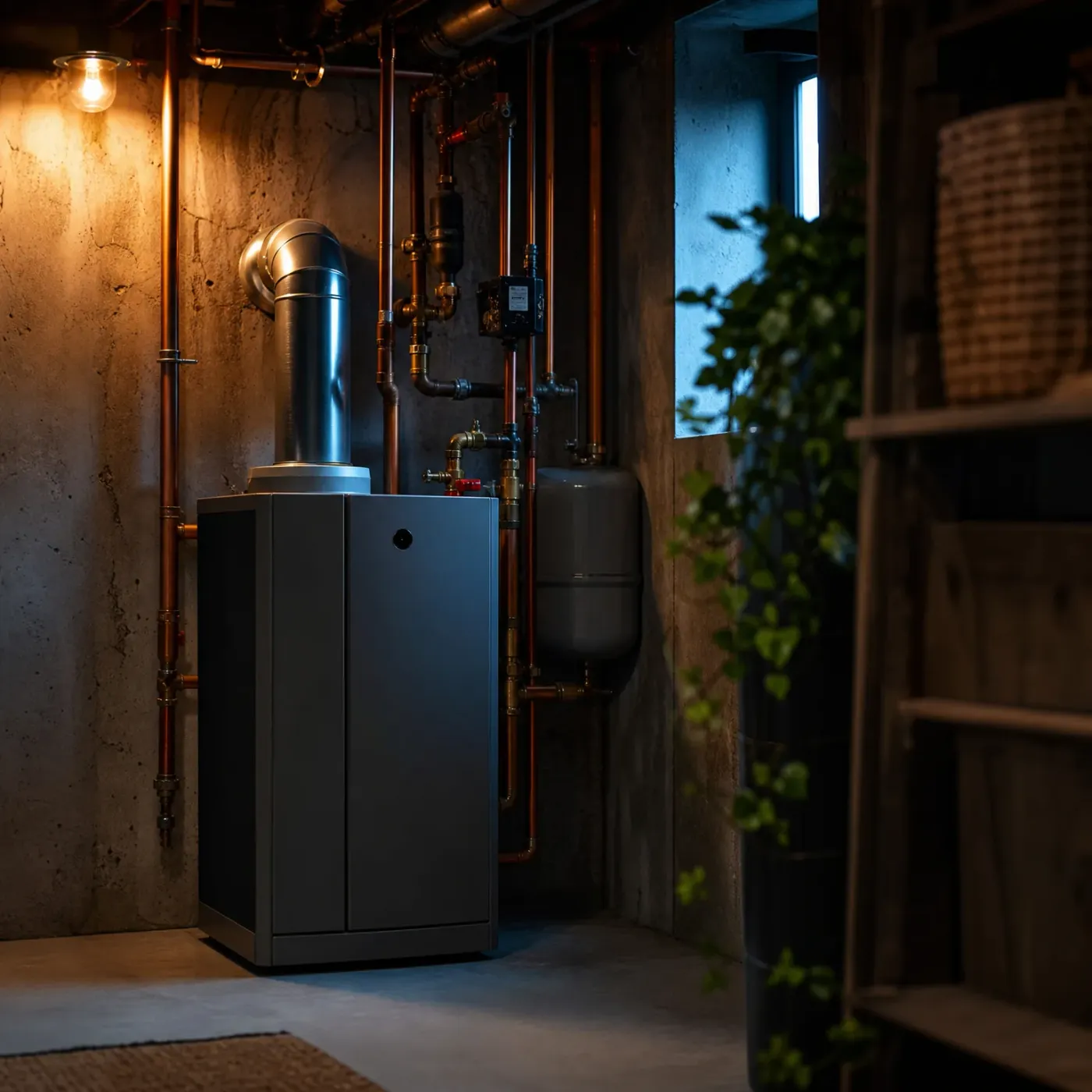
Hand off the boiler problem
Why your boiler is leaking water in Louisiana
Water around the base of a boiler that most homes here don't even use for heat means something inside has failed, not just a loose fitting. It could be a cracked heat exchanger, a bad valve, or a seal that's given out. This page walks through what's leaking and why. Send the form and you're done hunting for who can look at it.
Let a pro reach outA boiler leaks water because something inside it has physically failed. The most common cause is a pressure relief valve letting go because pressure inside the system has built up too high. It can also be a cracked heat exchanger, a loose or corroded fitting where pipes connect to the tank, or a failed seal around a pump or valve that has simply worn out over time. In Louisiana, most homes heat with electricity instead of a boiler, so if yours still has one, it may be older or less used than the systems it was built alongside, which gives corroded fittings and worn seals more time to fail quietly before anyone notices. Once a boiler starts leaking, the water itself can damage nearby wiring, flooring, or the unit's own electrical components, so a small puddle now is worth checking before it becomes a bigger repair.




Most leaks trace back to pressure. The relief valve near the top of the boiler is built to open once pressure gets too high, and that's it doing its job, not failing. If it keeps dripping afterward, the problem usually isn't the valve itself but the expansion tank behind it, which has lost the air charge that lets it absorb pressure as the water heats. Other leaks come from parts simply wearing out. The washers and gaskets sealing fittings and valves harden over years of heating and cooling, and once they shrink, they weep under pressure instead of holding it back. A heat exchanger can crack and let water seep out slowly, sometimes leaving a stain that comes back no matter how many times it's wiped away. On older cast iron sections, corrosion eats at the metal from the inside, so by the time a leak shows up, the metal underneath it has already thinned. None of these fix themselves, and each one points to a different part needing attention.
Where the water actually comes from
- The pressure relief valve sits near the top of the boiler and opens on its own once pressure inside climbs past the limit it's set for.
- A valve that keeps dripping after it opens usually means the expansion tank has lost its air charge and can no longer absorb pressure as water heats up.
- A cracked heat exchanger lets water seep out slowly where the metal has split, often leaving a stain or puddle that reappears even after it's wiped dry.
- Fittings and valves are sealed with washers or gaskets that harden and shrink over years of heating up and cooling down, and once they shrink they weep water under pressure.
- Corrosion works from the inside out on older cast iron sections, so a leak often shows up only after the metal underneath has already thinned.


Let someone else find the pro
Skip searching for a boiler pro and answer a few questions instead.
Send the request today and stop worrying about who to call.
Asking costs nothing, and the choice to hire stays yours.
Call Now or Watch It
Call someone now
- A boiler that's leaking has something inside it that's already failed, and that doesn't fix itself or wait for a convenient week.
- A cracked heat exchanger or a valve that won't seat back down tends to get worse the longer the boiler keeps running.
- Water pooling at the base can reach the gas line or the wiring underneath, so the longer it sits the more it can touch.
- A contractor who sees it now can usually tell you in one visit whether it's the valve, the tank, or the heat exchanger.
- Louisiana summers are muggy enough on their own without a wet mechanical closet sitting there growing something worse.
Watch it a while
- A small drip from a fitting might just need the fitting tightened, and that's a smaller job than most of what causes a leak.
- If the boiler only runs part of the year, a slow leak might not do much damage before anyone gets to it.
- Some homeowners shut the boiler off themselves once they see water and wait to see if it starts again before calling anyone.
- Waiting means living with a bucket or a towel under the unit, and checking it yourself every day it sits.
- The longer a failed part keeps leaking, the more it can damage the floor, the cabinet, or whatever sits nearby.

Pressure inside the boiler climbs past the relief valve's set limit.
The relief valve opens and pushes water out through its discharge pipe.
Water tracks down the pipe and drips near the base of the boiler.
A valve that won't reseat keeps dripping even after pressure drops.
Winter nights average 43°F statewide
Winter nights here only dip to about 43°F on average, so your boiler isn't running hard or often. A leak isn't from strain on a cold night. It's a part inside that's already failed and will keep leaking until someone replaces it.
NOAA nClimDiv 1991-2020 county normals weighted by homes
What the leak means for you
- A leaking boiler means a part inside has already failed, and it won't seal itself back up.
- The relief valve, the heat exchanger, a fitting or a seal: whichever one it is, it needs a hand on it.
- Leaving it be while you wait for a slow week usually means a bigger repair later, not none at all.
- Finding a licensed contractor, calling around, and explaining the leak more than once takes time you don't have to spend.
- Sending the form here hands that search off to someone else and gets a contractor on the problem.
- Once the right part is replaced, the leak stops for good, not just until the next cold snap.
Water at the base of your boiler is a part that has already given out. It's not a seasonal thing and it's not going to stop on its own. The relief valve could be venting because pressure built up too high, the heat exchanger could have a crack in it, or a fitting could have worked loose or corroded through. Whichever one it is, the boiler needs a licensed hand on it before the damage spreads past that one part.
Left alone, a small leak tends to become a bigger repair. A valve that won't reseat keeps dripping. A hairline crack in the heat exchanger doesn't close up. Water sitting near the base can get into wiring or controls it was never meant to touch. None of that gets better by waiting for a slower week.
What usually eats the time isn't the repair, it's everything before it: finding a contractor who's actually licensed, calling around to see who can come out, then explaining the same leak to each one. Sending the form here skips that part. You're not left sorting through names or repeating yourself on the phone. A contractor takes it from there and gets to the actual cause. Once that part is replaced, whether it's the valve, the exchanger, or a fitting, the leak stops for good. Not until the next cold snap. For good.
One request and it's handed off
One form replaces the calls you'd make to find a boiler pro.