 Get matched
How long a boiler lasts in Louisiana
Say what's going on with your boiler, and a pro who works on them reaches out.
A boiler is not common equipment in a Louisiana home. Most houses here heat with electricity, and power is cheap enough that a boiler, if you have one, is probably older than the systems your neighbors are running. That changes how you should think about its lifespan. There's no local average to compare it to, because so few homes around you have the same setup.
What tends to decide how long a boiler lasts has less to do with Louisiana's weather and more to do with how lightly it gets used. Winters here are short, so a boiler in a Louisiana house often runs far fewer hours a year than the same unit would in a colder state. That can stretch its working life well past what you'd expect from a general estimate. It can also mean the unit sits idle for long stretches each year, which brings its own wear on seals and connections.
Muggy summers don't touch a boiler directly, since it isn't running, but a mechanical room that stays humid most of the year can take a toll on any metal components sitting unused for months at a time.
Because boilers are uncommon here, finding someone who actually works on them regularly, rather than mostly handling the heat pumps and electric furnaces that fill most Louisiana homes, matters more than it would somewhere boilers are standard. When you're ready to look into installation, you can be matched with a licensed, local contractor who takes on boiler work and knows what tends to go wrong with units that run on this kind of schedule. It's one contractor reaching out to you directly, not a handful of companies competing for your callback, and they'll work from the specifics of your home and your equipment rather than a general rule of thumb.
How long does a boiler last in Louisiana?
If you have a boiler in Louisiana, it's not the system most of your neighbors are running. You're probably wondering if yours is on borrowed time, especially if you don't know when it was installed or whether it came with the house. A number helps, but what matters more is what that number means for a boiler that's been sitting in a Gulf Coast climate instead of the harsh winters they're usually built for.
A boiler in Louisiana typically lasts 15 to 20 years
That range holds true almost anywhere, because a boiler's life comes down to the tank and heat exchanger, not the climate around it. What's different here is how lightly most of these units get used. Louisiana winters are short and mild, so a boiler in this state often runs far fewer hours over its life than one in a cold climate, which can let it run well past 20 years if it's been kept up. The flip side is that a system this old was likely installed when boilers were a more common choice here, which means parts for it may be harder to source today. If yours has never been serviced or you don't know its age, that 15 to 20 year mark is the point to start asking questions.




A local pro for your boiler installation
A boiler that's been quietly running since before you owned the house is hard to judge from the outside. No sound it makes tells you what's happening inside the tank or the heat exchanger, and nobody can tell you its age just by looking at your street. What a boiler like that needs is someone who sees this exact situation often, a gas boiler in a Louisiana home that was probably put in decades ago and never swapped for electric because it still worked. That's a narrower read than most contractors get asked to make, since so few homes around you have one. A local contractor who installs these knows what tends to fail first in a unit this age and what a straight install looks like when the old one finally needs replacing. You'd be handing this off to one contractor, not fielding calls from several, and the read you get back is about your boiler, not a generic one.
How a Boiler Actually Wears Out
- A boiler heats water in a sealed tank and sends it through pipes to radiators or a coil, instead of pushing heated air through ducts.
- The heat exchanger is the part most likely to fail first, since it holds the fire on one side and the water on the other and takes the stress of both.
- Mineral buildup inside the tank and pipes makes the heat exchanger work harder to move the same amount of heat, which shortens its life.
- A corroded flue pipe or a cracked heat exchanger are both reasons a boiler gets condemned long before its other parts wear out.
- Low water pressure in the system trips a safety switch and shuts the boiler down before it lets the heat exchanger run dry.
- Circulator pumps and expansion tanks wear out on their own schedule and get replaced without needing a whole new boiler.
A boiler doesn't move air through ducts. It heats water in a sealed tank, then sends that hot water out through pipes to radiators or a coil, and the water comes back around to be heated again. That loop is the whole system, and almost everything that can go wrong happens somewhere along it.
The heat exchanger sits at the center of that loop, with the fire on one side and the water on the other. It takes the stress of both, which is why it's usually the first part to fail. Mineral buildup inside the tank and pipes adds to that stress over time, making the heat exchanger push harder to deliver the same heat it used to put out with less effort. That extra strain is what wears it down early.
Some failures end a boiler's life outright. A flue pipe that's corroded through, or a heat exchanger that's cracked, gets a boiler condemned on the spot, even if every other part is still sound. Other failures are just routine. If water pressure in the system drops too low, a safety switch shuts the boiler down before the heat exchanger can run dry and burn out, which protects the unit rather than ending it. Circulator pumps and expansion tanks wear out too, but on their own timeline, and replacing one of those doesn't mean replacing the boiler. Knowing which kind of failure you're looking at is most of what determines whether a boiler gets repaired or replaced.
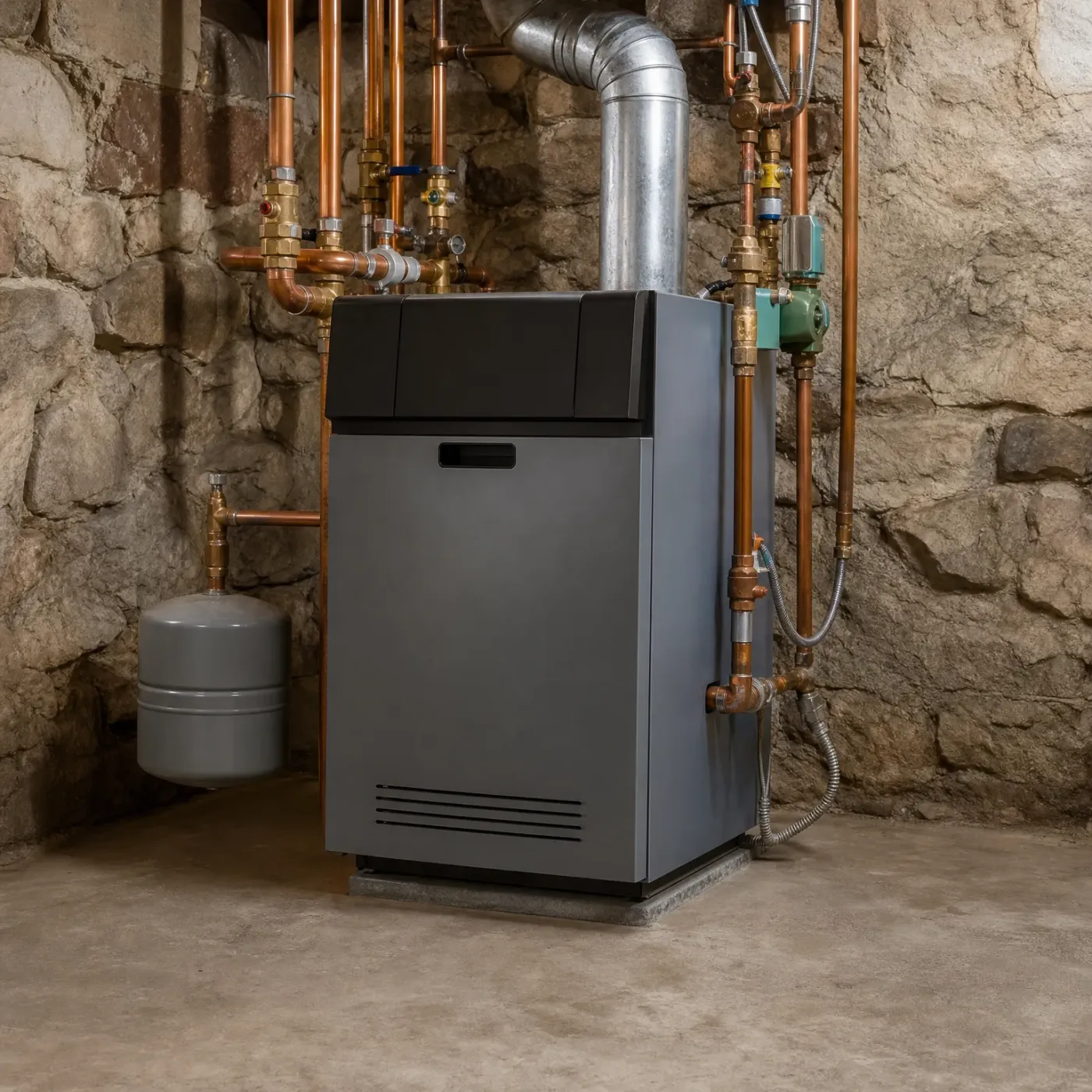
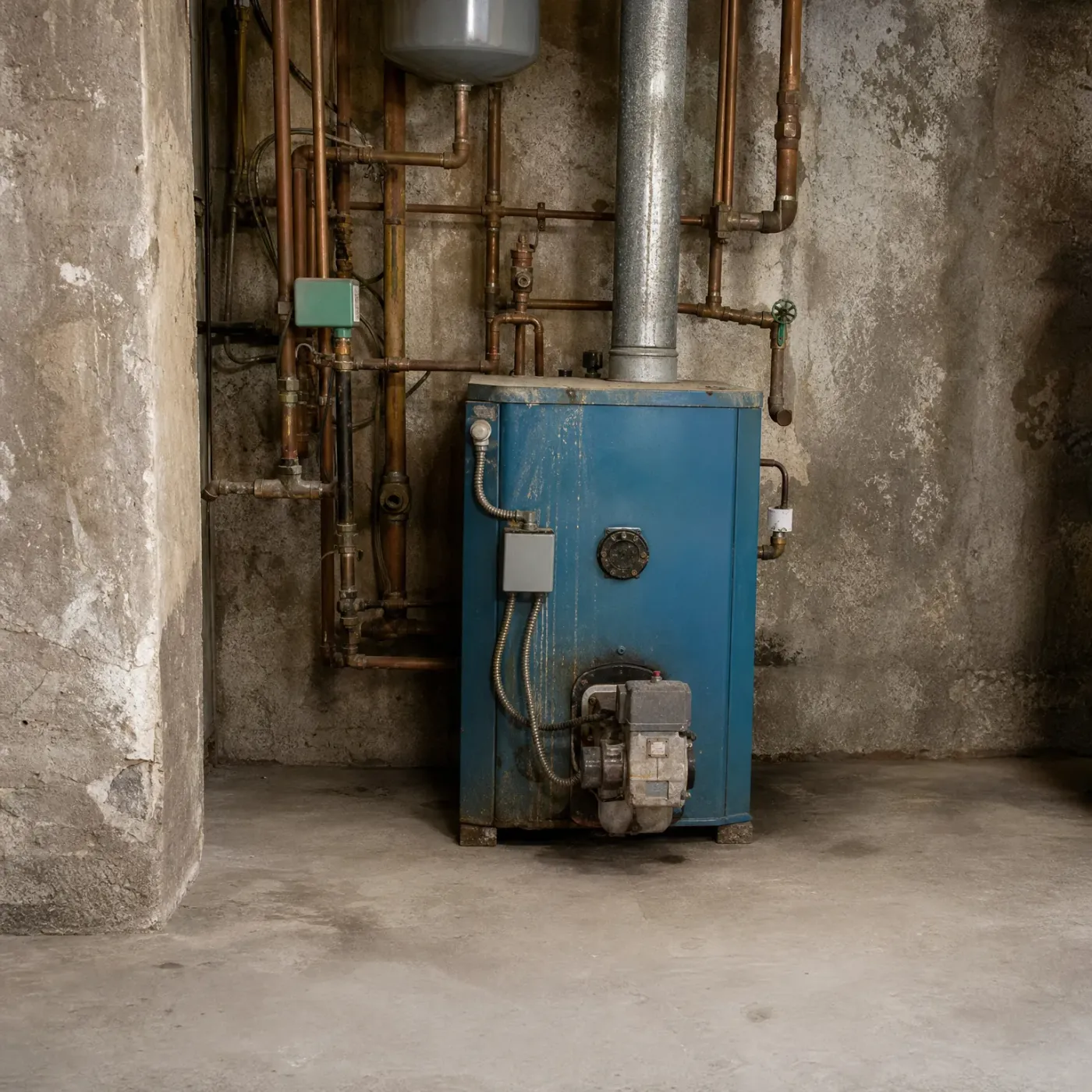


Winter nights average 43°F statewide
A 43°F night doesn't ask much of a boiler, not like a Northern winter would. Yours isn't working hard most of the time, which is part of why an old one can keep running without showing it. Mild nights hide problems that only show up when a system has to push harder.
NOAA nClimDiv 1991-2020 county normals weighted by homes

A boiler this uncommon deserves a straight answer
Most boilers last somewhere between 15 and 30 years, and where yours falls in that range depends on how it was maintained and what shape the tank and heat exchanger are in now. In a state where almost nobody heats this way, there's no neighbor down the street to compare notes with. You're on your own to figure out whether yours still has years in it or whether it's quietly running past its time.
That's a judgment call better made by someone who's actually looked inside the tank, not guessed at from outside. A local contractor who works on boilers in this area knows how rare they are here and what tends to go wrong with one that's sat unmonitored for years. Getting matched with one means a single contractor reaching out to look at your specific unit, not a handful of companies competing for your number.

Get the right pro for your boiler
Your request goes to one pro, not a list of companies.