




Boiler leaking water in Baton Rouge, LA

Skip calling around

A boiler leaking water does not get better on its own, and most boilers in Baton Rouge homes sit in a closet or utility space where that water can spread fast. You could spend the next hour searching for someone who works on boilers in East Baton Rouge Parish, then calling two or three companies, explaining the leak to each one, and waiting to see who calls back first with a number worth comparing. That is the part this page takes off your plate. Tell it what you're seeing, and it goes to one licensed local contractor, someone who works on boilers in this area all year and has seen what usually causes a leak like yours. You are not left sorting through a pile of quotes or fielding calls from companies you never asked to hear from. One contractor, matched to your situation, so you can get back to dealing with the leak itself instead of the search for help.

A leaking boiler usually means a failed seal, a cracked heat exchanger, or too much pressure inside the system. The pressure relief valve is the most common source. It is built to open and release water when pressure climbs too high, and once it has done that a few times, it can stay weak and drip even at normal pressure. A leak can also come from a loose fitting on a pipe union, a worn circulator pump seal, or corrosion that has worked through a tank or fitting over the years. Since most homes in Baton Rouge heat with electric systems rather than boilers, a boiler here is usually an older setup or one tied into radiant heat, and parts for it are not always sitting on a typical truck. Whatever the source, the water is telling you something inside is failing, and running the system while it leaks can let that failure spread to the heat exchanger or the controls around it.

Why does a Baton Rouge boiler only run part of the year?

  • Winter nights average 42°F

    Overnight lows average 42°F here in December, January and February, so the boiler isn't working against a hard freeze most winters.

  • Heat runs November through March

    Heat runs about five months a year here, November through March, so a leak can sit unnoticed the other seven months.

  • 64.7% of homes heat with electricity

    64.7% of homes in the parish heat with electricity, which is why a boiler problem here often means an older or less common setup.

NOAA nClimDiv 1991-2020 · ACS 2020-2024

A small drip versus a steady leak

A few drops near a fitting after the boiler fires up can be normal condensation finding its way out. It dries up on its own and doesn't come back the next time the system runs. A steady leak is different. It puddles under the unit, it stains the floor or the wall behind it, and it's there every time you check, not just once. If what you're seeing is the second kind, the system needs to be looked at before it runs again. A boiler that keeps leaking under pressure can lose enough water that it shuts itself down or damages the heat exchanger.

Running it anyway versus shutting it off

Some homeowners leave a leaking boiler running because the house still needs heat and the leak seems minor. That can work for a short stretch, but a boiler losing water is also losing pressure, and low pressure makes the system work harder to do the same job. Shutting it off until a contractor can check the valve, the seals, and the heat exchanger protects the rest of the system from damage that a slow leak can cause over time. Baton Rouge winters are mild enough that going a day or two without heat rarely leaves a house cold, which makes shutting it off the safer choice while you wait for someone who works on boilers in this area to take a look.

A gray-haired man in a dark sweater sits on a light gray sofa in a living room, looking toward a sunlit window with trees outside.
A gray-haired man in a dark blue sweater sits on a light gray sofa in a sunlit living room, looking off to the side, with a potted plant, shelving unit, and large glass doors behind him.
A bearded man with graying hair in a dark green sweater sits on a sofa in a living room, looking off to the side, with a sliding glass door and a dim kitchen doorway behind him.
A gray-haired man in a dark knit sweater sits on a light gray sofa in a living room, looking toward a sunlit window, with houseplants, a lamp, and framed art in the background.
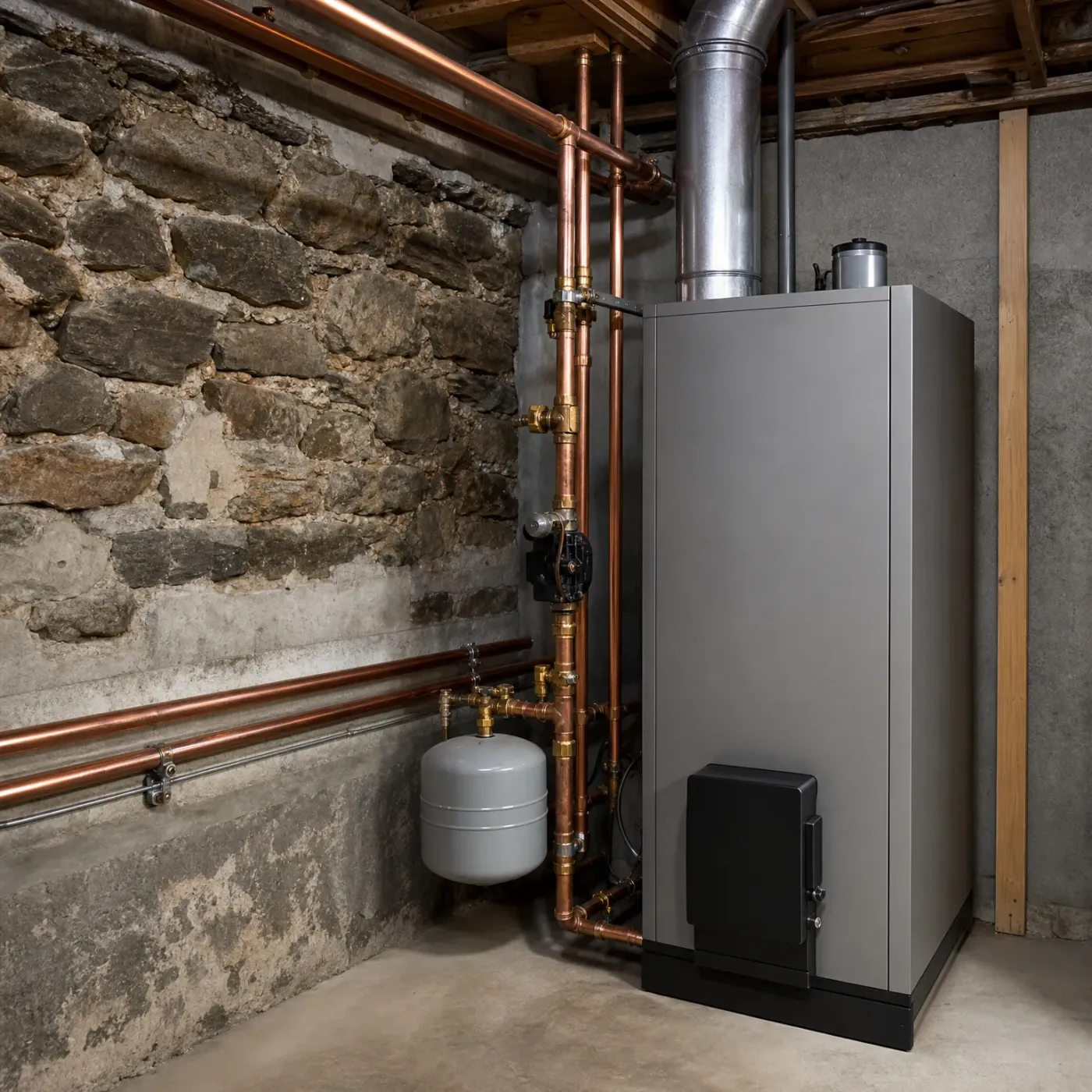
A gray boiler unit with a metal flue stands in a basement beside copper piping, valves and a small expansion tank, against a stone and concrete wall with wooden joists overhead.

No calling every shop in East Baton Rouge Parish

The pro who gets in touch is licensed in Louisiana and works in East Baton Rouge Parish.

Skip calling shops to ask who repairs boilers in East Baton Rouge Parish.

Fill out one form

You're not committing to anything by asking.

Why is water pooling around the bottom of my boiler?

Water collecting at the base of the unit is one of the more worrying signs, because it's hard to tell from a puddle alone whether it's the tank itself or something feeding into it. You want to know where to look before deciding how urgent this is.

Check the bottom seam of the tank first, then work up

Water at the base usually comes from one of three places, and where you look tells you what's happening. If the puddle sits directly under the tank itself, the tank may have a crack or a corroded seam, and that's a sign the tank is failing rather than a single part. If the water traces back to a fitting, valve or pipe joint above the tank, it's dripping down the side rather than coming from inside the tank, which is a better outcome since fittings and valves get replaced without replacing the whole unit. A boiler with a cracked heat exchanger can also pool water at the base as it drains internally. Wipe the area dry, then watch where the next drops appear.

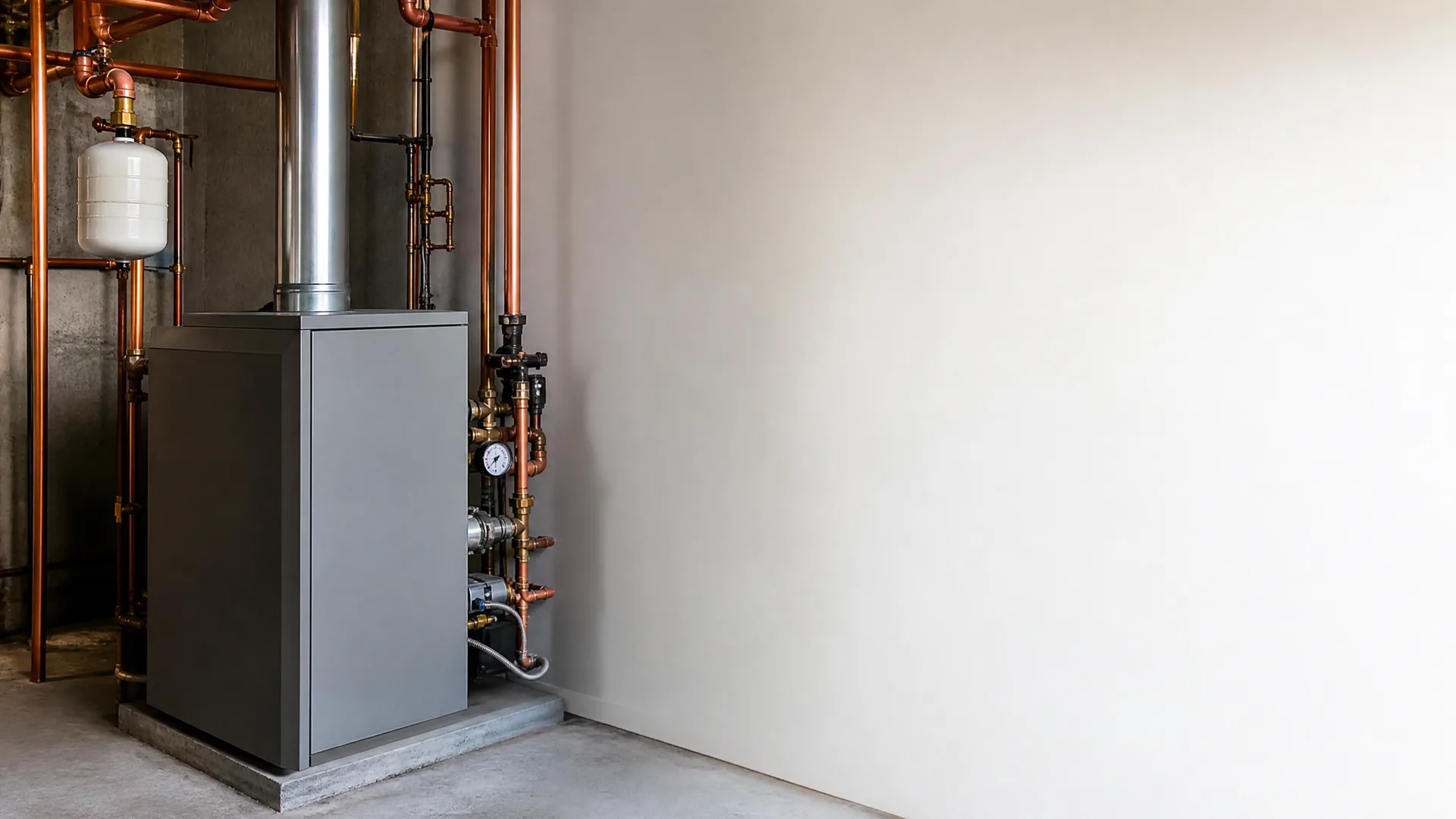
A grey floor-standing boiler with a metal flue and copper pipework, valves and a pressure gauge stands in the corner of a room with plain light walls and a concrete floor.

Why pressure builds in the first place

A boiler heats a closed loop of water, and as that water heats it expands. The system needs somewhere for that expansion to go, usually an expansion tank sized for the boiler. If that tank waterlogs or fails, the only place for the extra pressure to go is out through the relief valve. A boiler that trips its relief valve every few weeks almost always has a tank problem behind it, not a valve problem.

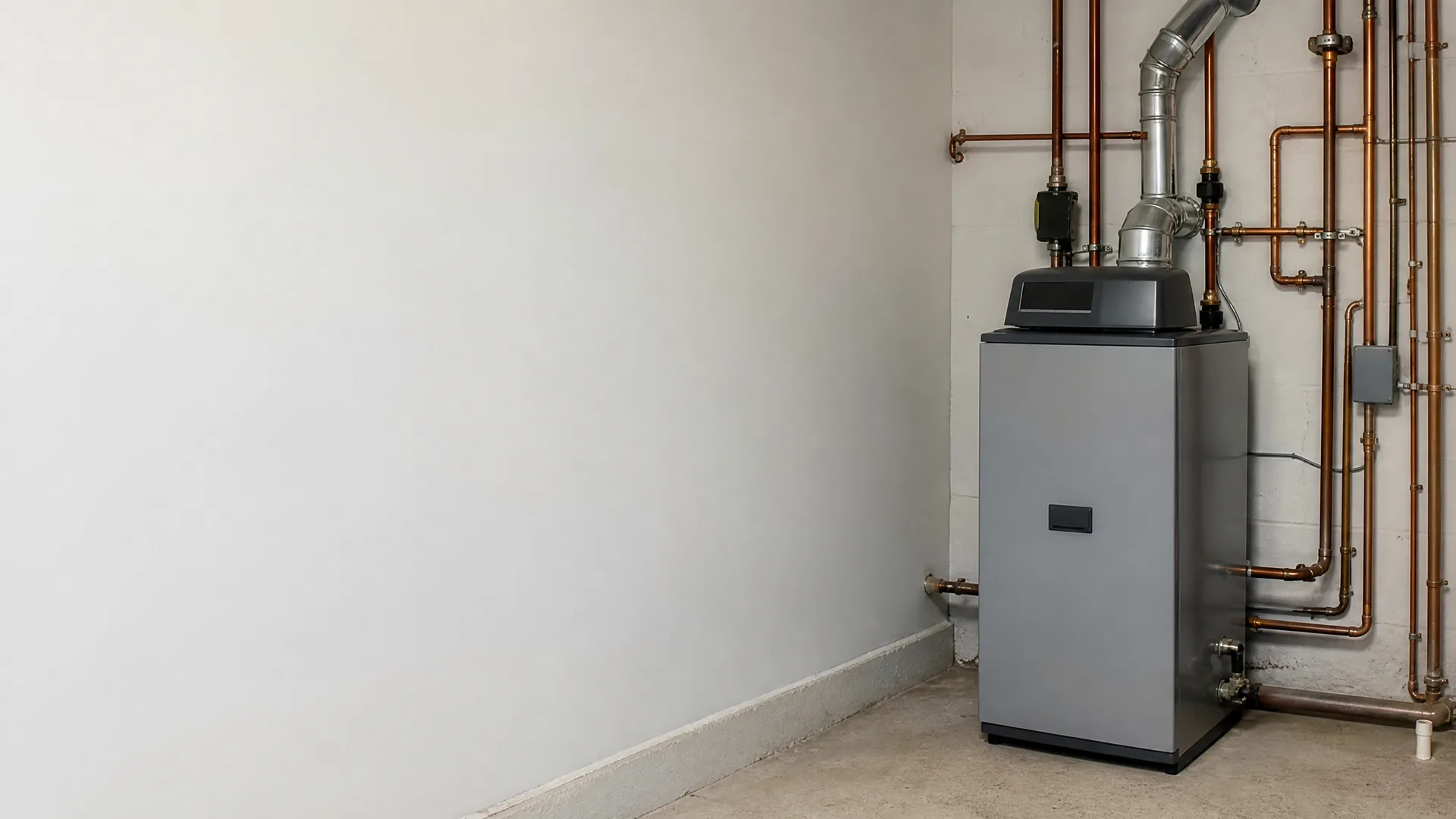
A gray floor-standing boiler with a metal flue pipe stands in the corner of a plain painted basement room, connected to copper pipes running along the wall.

What the heat exchanger actually does

The heat exchanger is the part that separates the fire or the flue gases from the water running through the system. It is thin on purpose, built to move heat into the water as fast as it can. Years of heating and cooling cycles put stress on that metal, and a hairline crack can open along a seam. Once the exchanger cracks, water finds its way out at the joint, and tightening a fitting nearby won't stop it.

What's that water doing on my floor

Look at where it's coming from. Water on the floor in front of the unit, a damp spot that keeps coming back, or a rusty stain trailing down the side of the tank all point to a leak rather than condensation. You might notice the smell of mildew in the closet before you see the water itself, or find the drywall nearby soft to the touch. If the boiler sits on a wood subfloor, standing water will warp it given enough time, and water finding its way to nearby wiring or a gas line is its own problem. A boiler that keeps losing water will also keep losing pressure, and a boiler that won't hold pressure won't heat the house right.

A gray and blue floor-standing boiler in a basement corner, with a metal flue pipe and copper and black piping, valves, and a gray expansion tank mounted on an unfinished wood-framed wall beside a concrete wall.

A boiler that's holding pressure right

Copper lines run clean to every fitting, the expansion tank sits mounted and dry, and the panel shows steady pressure. No rust streaks, no puddle at the base. This is a boiler doing its job out of sight, the way it should run for months at a stretch.


A green oil-fired boiler with a flue pipe, burner and circulator pumps sits on a concrete pad in a basement corner, surrounded by copper piping and an expansion tank against concrete walls.

A boiler under stress

Flue pipe venting hard, piping crowded against block walls, the unit raised on its pad because water has found that floor before. An oil-fired boiler working this hard with a leak somewhere in the loop needs someone to trace it back before it gets worse.

Winter nights average 42°F

At 42°F overnight, your boiler isn't straining against a hard freeze, so a leak now points to a seal, valve, or pressure problem rather than the system working overtime in the cold. Worth having looked at before it runs again tonight.

NOAA nClimDiv 1991-2020

  1. A tech checks system pressure on the gauge first.

  2. Each fitting and valve gets checked for active drips.

  3. The expansion tank gets tested for waterlogging or failure.

  4. The heat exchanger gets inspected for cracks or corrosion.

A closed silver laptop and a ceramic mug of dark coffee sit on a wooden table in front of two chair backs, with a kitchen counter, tiled backsplash, wooden cutting boards, a vase of greenery and a potted plant by a window behind.

A leak like this needs a look before the next cycle

A boiler leaking water comes down to a handful of causes: a stuck pressure relief valve, a waterlogged expansion tank, a worn seal, or a crack in the heat exchanger. Finding which one it is takes a gauge and a set of eyes on the system, not guesswork from across the room. Once that part is found, it gets repaired or replaced, and the boiler goes back to running the way it should.

You could spend the afternoon calling around East Baton Rouge Parish, explaining the same leak to every company that picks up, then sorting through whoever calls you back. Instead this connects you to one licensed local contractor who works on boilers in homes like yours all winter and knows which part tends to go first. No chasing quotes, no repeating yourself to a second or third company. Just the leak, looked at and fixed.

A gray upholstered sofa with a matching cushion sits beside a potted plant and a wooden table holding a small green plant in a stone pot, near a curtained window.
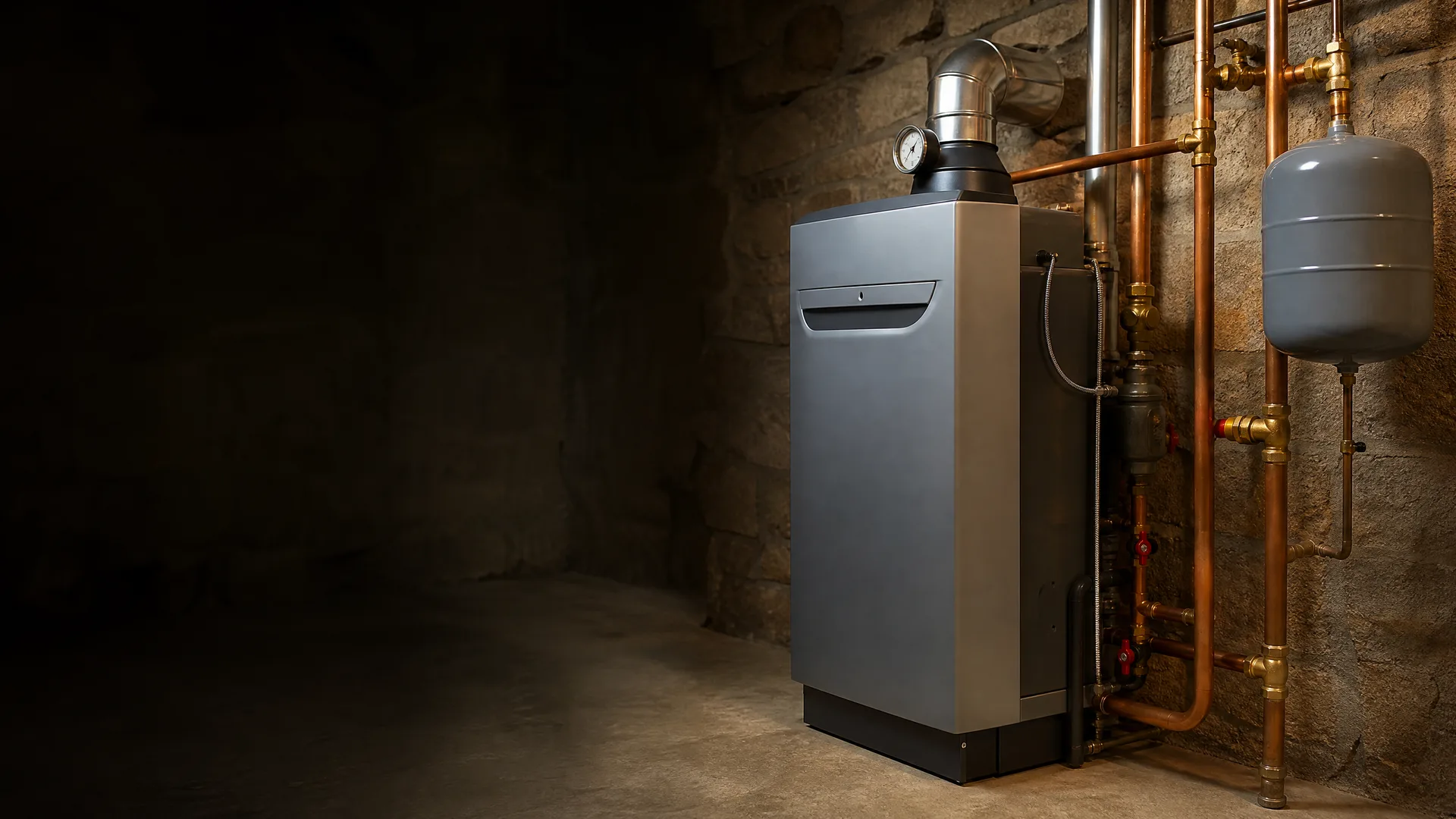
A gray floor-standing boiler with a flue pipe and pressure gauge stands against a stone basement wall, connected to copper and brass piping and a gray expansion tank.

No phone calls to make

Step 1 of 3: Equipment